

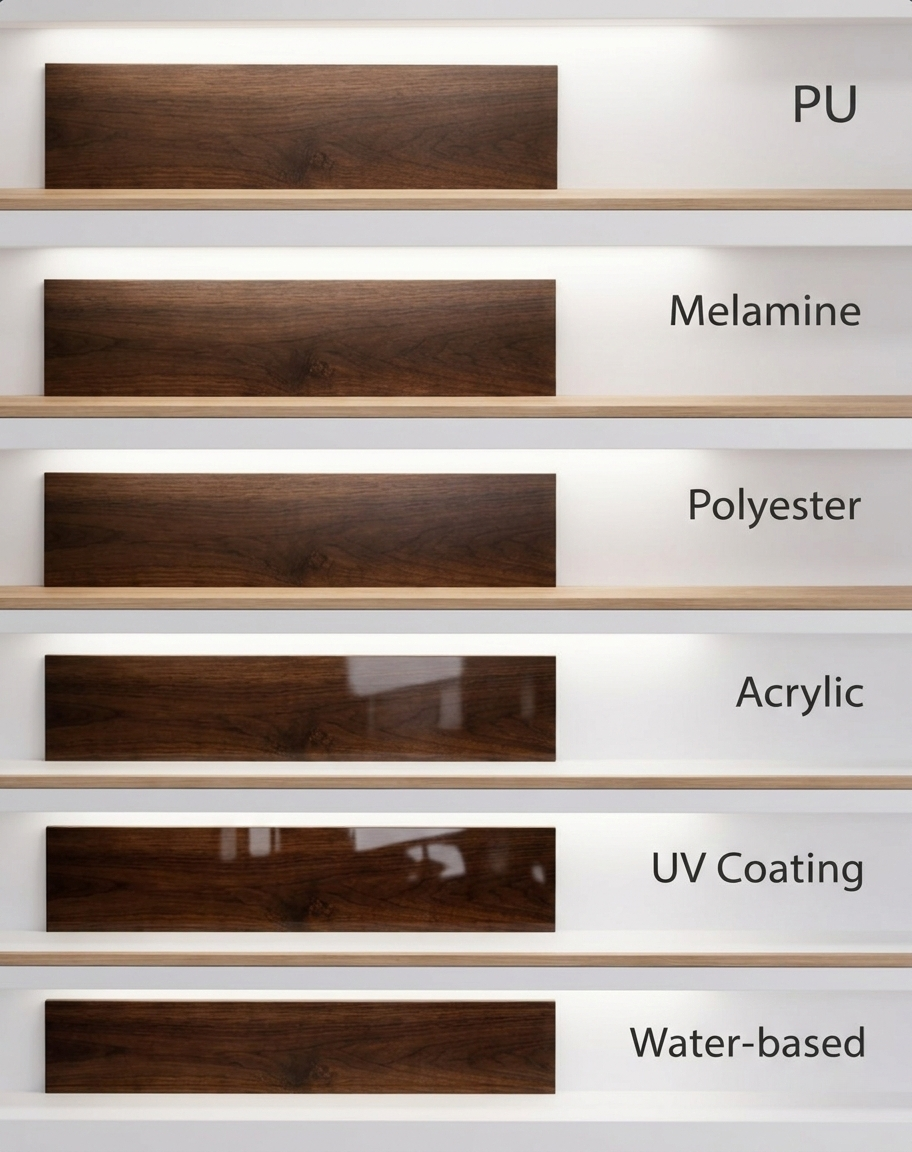
The Complete Guide to Veneer Polish Finishes
(PU, Melamine, Polyester, Acrylic, UV & Water-Based)
Natural veneer remains one of the most premium and timeless finishes in furniture. But the beauty of veneer is only as good as the polish system applied over it.
In this guide, we break down each polish system in a practical way for architects, interior designers, and informed customers.
1. PU (Polyurethane)
PU finish is arguably the most dominant coating in the professional furniture market. It is a polymer film that adheres to the surface of the wood. It can range from ultra-matte to high-gloss.
What it is: A durable, versatile coating formed by the chemical reaction of organic compounds.
How it is best applied: Generally applied via a spray gun in a controlled environment. It often requires a catalyst (hardener) mixed just before application.
Where is it used: High-traffic residential furniture (dining tables, sofas) and commercial settings where durability is prioritized.
When is it used: When you need a reliable, “all-around” strong finish that offers excellent protection against spills and abrasion.
Possible use cases to avoid: Avoid low-cost PU on exteriors; while water-resistant, standard interior PU will yellow and crack under direct, sustained UV exposure.
Longevity: High. A quality PU finish can last decades if well-maintained.
Pricing: Mid-range. Moderate material cost, but requires skilled labor and a spray booth setup. ₹₹₹
2. Melamine (Acid-Catalyzed)
Often confused with laminate, melamine finish for real wood is actually a specific type of lacquer (technically a “catalyzed lacquer” or melamine-formaldehyde finish). It is known for its clarity and speed.
What it is: A fast-drying lacquer that uses an acid catalyst to cure. It forms a hard film that brings out the natural grain, as seen in the slightly warmer tone in the image.
How it is best applied: Sprayed. It dries remarkably fast, allowing for multiple coats and sanding in a single day.
Where is it used: Production-line cabinetry, office furniture, and affordable residential wood furniture.
When is it used: When “speed to market” or project completion is crucial, and when a traditional, hand-rubbed look is not required.
Possible use cases to avoid: Bathroom vanities or humid environments. Melamine is more susceptible to water damage (especially near joints) than PU or Polyester.
Longevity: Medium. It is prone to “brittleness” and cracking over many years, as it does not expand and contract well with the wood. ₹₹
Pricing: Low to Mid-range. The labor cost is low due to the fast drying time.
3. Polyester
If you see a piece of furniture that looks like it is covered in glass, it is likely polyester. This is the ultimate “full-fill” coating that creates a deep, dimension-altering luster.
What it is: A thermosetting resin that is extremely hard and heavy. It does not “coat” the wood grain; it builds a layer on top of it, making the surface perfectly smooth.
How it is best applied: It is often poured onto flat surfaces or sprayed heavily, and then massively sanded and buffed through finer and finer grits to achieve a mirror shine.
Where is it used: High-end luxury furniture, grand pianos, boardroom tables, and luxury yacht interiors.
When is it used: When the absolute highest gloss level and maximum depth of grain are required.
Possible use cases to avoid: Furniture subject to heavy daily impact. While polyester is extremely hard, if it does chip or crack, it is very difficult to repair.
Longevity: Ultra-High. It is almost completely inert once cured and resistant to chemicals, water, and heat.
Pricing: High. While the resin isn’t vastly expensive, the labor required to achieve the gloss is immense. ₹₹₹₹₹
4. Acrylic
In the world of clear coats, acrylic is prized for one specific trait: it is non-yellowing. It offers fantastic clarity but is softer than PU or Polyester.
What it is: A synthetic polymer coating (similar to Plexiglass) suspended in a solvent or water.
How it is best applied: Sprayed. It flows nicely and dries with excellent, crystal clarity.
Where is it used: Light-wood furniture (maple, oak) where the designer wants to prevent the wood from shifting to amber over time. Also used for cabinet doors and drawers.
When is it used: When color fidelity to the raw wood state is the number one design priority.
Possible use cases to avoid: Primary kitchen counter surfaces or cutting boards (if the piece is wood). Acrylic is prone to scratching.
Longevity: High (for color), Medium (for abrasion). It will keep wood looking natural for decades, but it will show scratches sooner than PU.
Pricing: Mid-range. Comparable to PU. ₹₹₹₹
5. UV Coating
This is a modern industrial finish. It uses special photo-initiators in the lacquer that cure instantly when exposed to powerful ultraviolet light. This results in the “wettest” high-gloss look with zero dry time.
What it is: An advanced resin applied via specialized machinery, cured instantly by UV lamps.
How it is best applied: Strictly an industrial process. Flat panels pass under rollers and UV light on a conveyor belt.
Where is it used: Pre-finished floorboards, cabinet panels, and flat-pack furniture components. It is mostly applied to components before assembly.
When is it used: Mass-production where millions of linear feet must be processed instantly.
Possible use cases to avoid: Custom, custom-built, complex-shape furniture. This finish cannot be easily applied to 3D objects or small batch orders.
Longevity: High. It creates a very tough, non-volatile surface.
Pricing: Low (at the component level). The machinery is expensive, making the unit cost for mass-produced items very low. ₹₹₹₹
6. Water-based
This is the modern, eco-conscious choice. Historically weak, modern water-based polyurethanes have improved dramatically in durability.
What it is: A finish where the resins (often acrylic or urethane) are dissolved in water rather than harsh solvents. It has low VOCs (Volatile Organic Compounds) and often dries with a slightly cloudy, more natural/waxy look, as seen in the last panel.
How it is best applied: Sprayed. It requires careful technique as it dries differently than solvent-based finishes and is prone to “raising the grain” of the wood, which requires sanding between coats.
Where is it used: “Green” building projects, children’s furniture, interiors focusing on natural aesthetics, and environments requiring strict air quality compliance (e.g., hospitals, schools).
When is it used: When sustainability, air quality (low VOCs), and a soft, non-plastic, natural feel are required.
Possible use cases to avoid: Bar tops or high-moisture kitchen surfaces (though 2-component water-based finishes are improving).
Longevity: Medium to High (project dependent). A high-quality, modern, catalyzed water-based finish can compete with mid-range PU.
Pricing: Mid-to-High. The material cost is often higher than solvent-based finishes, and it requires slightly more labor for application and sanding. ₹₹₹₹
Key Takeaways for the Designer
When selecting a finish, don’t just specify “gloss.” Define the type.
Need ultimate sheen and depth? Polyester.
Need ruggedness and versatility? PU.
Need to preserve a light wood’s color? Acrylic.
Need to meet VOC specifications? Water-based.
Working on a mass production panel project? Specify UV.
Need the warmest tone and quickest finish? Melamine.
In Indian climate conditions—especially humid cities like Mumbai, Chennai and Kolkata—choosing the right veneer polish is critical. PU and Polyester finishes perform better against seasonal moisture variations compared to basic Melamine finishes.
Frequently Asked Questions (FAQs)
1. Which is the best veneer polish for furniture in India?
PU polish is generally the best balance of durability, moisture resistance, and finish quality for Indian homes. For ultra-high gloss luxury projects, polyester polish is preferred.
2. What is the difference between PU and Melamine polish?
PU polish offers higher durability, better moisture resistance, and longer lifespan compared to Melamine. Melamine is more budget-friendly but less durable.
3. How long does veneer polish last?
Depending on the type:
Melamine: 4–6 years
PU: 8–12 years
Polyester & UV: 10–15 years
Proper maintenance significantly increases lifespan.
4. Which polish is best for wardrobes?
For wardrobes in Indian climate conditions, PU polish is most recommended due to its durability and moderate moisture resistance.
5. Is water-based polish good for furniture?
Yes, water-based polish is eco-friendly, low VOC, and ideal for green buildings, homes with children, hospitals, and LEED-certified projects.
6. Which veneer polish gives mirror finish?
Polyester polish provides a piano-like, ultra-high gloss mirror finish and is commonly used in luxury furniture.
7. Is veneer polish waterproof?
No veneer polish is 100% waterproof. However, PU and Polyester offer better moisture resistance compared to Melamine.
8. What is UV coating in furniture?
UV coating is a factory-applied finish cured under ultraviolet light, offering high durability and consistent quality across panels.
9. Which polish is best for humid Indian cities?
PU and Polyester perform better in humid cities like Mumbai, Chennai, and Kolkata due to better moisture resistance.
10. Which veneer finish is most durable?
Polyester and UV coating are the most durable finishes when applied in controlled factory environments.
For more information – https://encoreprimefurniture.com/resources/blogs/